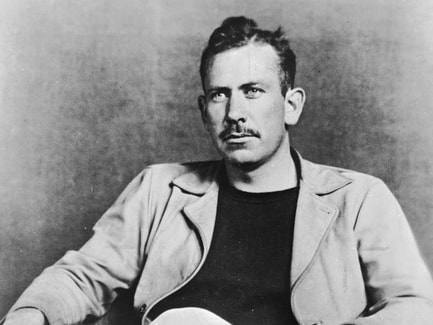
I am coming towards the end of my goodreads ‘reading challenge’. I pledged 50 books but have only read 42. Consequently I needed a slim book to read-how shallow I am! A dear friend and I had recently been chatting about John Steinbeck and he recommended Cannery Row to me. I adore Of Mice and Men (especially the very opening description) and have actually taught it more times than I’ve had hot dinners, so it made perfect sense to read this book. I’m so glad I did.
John Steinbeck’s Cannery Row – Opinion Piece
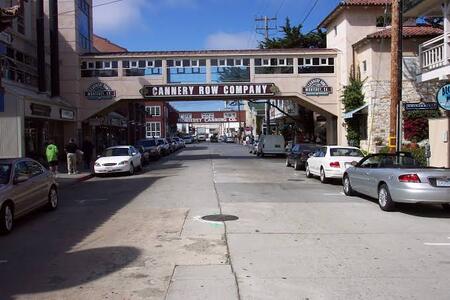
Cannery Row is a beautiful book guaranteed to encourage introspection and reflection on life. Set in the real Monterey Ocean View Avenue, fictionalized as Cannery Row, it is a study of identity. We learn about the individual characters and all their idiosyncrasies. From the generous hearted prostitutes, to the semi-lawless homeless, to the shrewd but semi-down-and-out businessman, we see into the soul of each character, as they come together to make the community of Cannery in the years of the great depression.
The structure of Cannery Row is linear and tells loosely inter-linked and intertwining stories that centre largely around the ecologist ‘Doc’. Fact and fiction overlap, (with only a quick look on Google, we learn that Doc is based on Steinbeck’s long standing friend Rickett.) There are separate episodes that occur during chapters that are featured between those comprising the main linear progression of the story. These ‘in-between chapters’ jar against the smoothness and the lull of the main text. The most poignant of the sub-stories, I think, is the story of two small boys where one knows the other’s father committed suicide with rat-poison and taunts him for this. The portrayal of the cruelty that people are capable of, even as children, and the need for one upmanship, in this chapter, is shocking.
Cannery Row is the type of book that needs savouring; each bite is worth lingering over. The final chapter of the successful party extensively quotes from the beautiful poem Black Marigolds, translated from the Sanskrit by E Powys Mathers. The reader finishes the text with a sensation rather like being served the finest delicacies in the poshest restaurant, knowing that it would be a sin to not linger over every mouthful. They are not likely to be exposed to such delicious delicacies again.