Why Reading Aloud Matters?
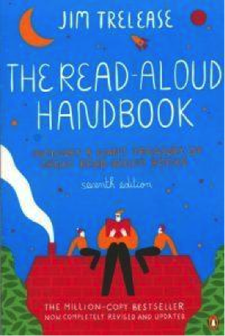
From sharing Roger Hargreave’s Mr Men stories with Year 1 children, to reading Shakespeare’s Hamlet with Year 13, I have never had any doubt that reading aloud is hugely valuable. This is a common view, and certainly one that I imagine all librarians and lovers of books share. The benefits of reading aloud books and reading aloud other texts is immense. It is my colleague, Stephen Murgatroyd, who I have to thank, as his recent extensive research into reading aloud. It has provided so much evidence to validate my belief that reading stories aloud is advantageous to all. As well as this, he also recommended the recent addition of Jim Trelease’s The Read-Aloud Handbook to our library and the excellent youtube clips at the end of this article.
Benefits of Reading Aloud
So why then is reading out loud worth shouting about? Reach Out and Read, an American non-profit organisation that advocates for childhood literacy, outlines the key benefits that reading aloud has for young children. Reading aloud to children stimulates language and cognitive skills, develops memory and motivates children to be interested in learning more. The pleasure brought from snuggling up with your small children and reading a book for the first time, or returning to one of their favourites over and over, is enormous. The motivation to develop as readers, because of the children’s positive associations with reading, must not be underestimated. In addition, being read to gives children the opportunity to practise listening, a crucial skill for their later schooling.
There isn’t an age cap for how long reading aloud is beneficial. Obviously, once of school age, the advantages of being read to extend into the classroom; it is important that this should continue throughout a student’s schooling, and definitely should not be curbed just because a child can read independently. The same applies at home, don’t stop reading aloud with your child just because they are not little anymore. Through reading out loud, not only does reading comprehension and fluency increase and writing skills extend, but vocabulary is also increased exponentially. Additionally, being read to aloud helps to create the perfect environment in which to explore diverse and challenging topics within a supportive and engaging environment. Why not take it in turns to read out loud next time you are at a bookclub meeting? See how it extends and develops the discussion about an aspect of your chosen book. Whilst it is clichéd to point it out, it is, of course, no coincidence that since time began stories have been used to explain and make meaning of the world. Readers of all technical ability can be exposed to topics with which they wouldn’t normally engage, and access text at a higher level than their reading comprehension allows.
Encouraging Reading Aloud
As far as I know there is no research demonstrating a correlation between having been read aloud to and increased levels of empathy and understanding of global issues, but I’d bet my last sixpence that the correlation exists! So whether a Year 1 class-based discussion is occurring about if Mr Noisy’s behaviour is principled when he takes revenge on Little Miss Scary frightening Mr Jelly, or whether Year 13 are analysing the consequences of Hamlet’s inability to take revenge on his own father’s murder, it is great to know that such a pleasurable activity as reading aloud facilitates the occurrence of such breadth of learning. With this in mind, the next time you have a few moments to spare, whether during a school reading week or if just chilling out with an infant, middler-schooler, teenager, or even a partner or friend, why not dip loudly and joyfully into a shared book and together reap the benefits of reading it aloud.