Book Review of Grown Ups by Marian Keyes
I simply cannot make my mind up about Marian Keyes. Rather like a packet of twiglets I begin reading with a premise that I don’t especially enjoy her books, but I then keep going back for more. Her latest title Grown Ups (which I have already blogged about briefly) has had this twiglet effect on me. I didn’t really enjoy the first 100 or so pages of Grown Ups and thought that Keyes was introducing far too many characters too quickly. I also thought her shifts in in time were a little awkward and jarring to the flow of reading. Then I decided I was being picky and I settled happily into reading the mid section of it. Once invested, I then had to stay up until 2.00 a.m. to read the final 200 or so pages as I simply couldn’t bear to put it down. Grown Ups went from a snack I could take or leave to a guilty feast that I had to devour there and then.
So a mixed response on my part …. I do think that Keyes tends to include too much dialogue in her books. I guess this is how she ‘shows’ rather than ‘tells’, but it reaches a point where it is intrusive. Whilst there is nothing wrong with some element of soul searching, self-revealing chat in any novel there’s no need to spell absolutely everything out for us. (We readers can infer and intuit!) Having said that Keyes books are so successfully representative of contemporary life that it is impossible not to forgive her for this occasional sledgehammer approach. Keyes’ observations are incredibly astute and so perceptive that the reader is left pondering and worrying about the characters and their lives as if they are actual friends and neighbours. I don’t know what the magic writing ingredient Keyes has but I found this happened to me, not only when I read Grown Ups, but also when I read The Break. The issues explored kept entering my thoughts literally months after I’d finished reading
Grown Ups somewhat ironically named, explores the family relationships of the three Casey brothers. Keyes uses the brothers as a backbone around which to structure the book, but the focus is equally on their wives, children, nephews and nieces. There’s the eldest brother Johnny, a good-looking extroverted, moderately successful business and family man, who finds himself in the midst of something like a mid-life crisis. Next is middle brother Ed. Seemingly ordinary his love for his wife is unwavering and solid. Ed demonstrates an unnerving depth of understanding about life. Finally, there is spoilt brat youngest brother Liam – womaniser, selfish-pig and borderline paedophile, he has little going for him.
Keyes is never one to shy away from difficult issues and in this book bulimia is explored with skill and sensitivity. It helps the readers (as bystanders and observers to the action) understand what those with the illness go through. What doesn’t work so well is Keyes’, at times, clumsy and unlikely plotting. In Grown Ups Keyes creates an unlikely scenario where one of the characters becomes concusse. This plot detail is set up as a device to enable. Clara to share unwelcome truths about her relatives.. She exposes family members for who they really are and so keeps the story moving forward. I’m afraid didn’t find this tool for developing plot convincing or realistic, but perhaps, on the other hand, that doesn’t really matter.
Book Discussion Questions for Marian Keyes' Grown Ups
In the book Ed leaves Clara when she stops seeking medical help for her bulimia. Do you think this was the correct course of action for him to take? Why or why not?
Liam and Nell marry quickly, but separate after less than a year of marriage? Nell reflects that the marriage was never likely to last and that she entered it knowing it wasn’t a forever marriage. What is your view of this attitude? Does it affect how you view Nell?
Who is your favourite character in the book and why?
Towards the end of the book Johnny claims that he never considered reigniting a romantic relationship with his ex lover? Do you believe him? Why or why not?
Jess is very upset about her 50th birthday celebrations. To what extent do you think she is right to be angry and hurt?
Who has the most solid relationship in the book? Why?
After Rory died Jess’ in-laws never forgave her for marrying his best friend. Why? How would you sum up the relationship between Jess, Rory and Johnny?
Does the menopause feature in ‘Grown Ups’? If so, how and when? Is this question only acceptable coming from a middle-aged woman? Discuss!
How is the ability to communicate effectively shown as a key life skill in the book?
Book Club Questions for Grown Ups (if you haven't read the book!)
Clara has to eat little and often in order to ‘manage’ her bulimia. Alcoholics can stop drinking completely. Discuss whether all addictions are equal?
Some people love large family get-togethers and others hate them. What about you?
Marian Keyes commented in a recent interview that her writing has developed over the years and that in her earlier novels her male characters were less well developed than now. What does this reveal about her, her readers and today’s world?
Marian Keyes writes long books but they are fairly quick to read. The chapters are quite short, there’s plenty of dialogue and the plots are driven by realism and relevance. What five ingredients do you think an excellent book should contain.
The age gap between Nell and Ferd is less than the age gap between Nell and Liam, yet the former seems far more significant to Nell’s sense of what is appropriate. How important a factor is age in relationships, both to the individuals in it and onlookers!
Keyes makes passing reference to contemporary issues such as Brexit, but, by and large, the novel focuses more on familial emotional relationships than society. This contrasts with other current releases, e.g. Jonathan Coe’s Middle England. How much context do you enjoy when reading contemporary realistic fiction?
Keyes has sold over 35 million books, yet she comes across as modest and unassuming. To what extent do you think ‘money’ changes an individual?
Summing Up of Marian Keyes' Grown Ups
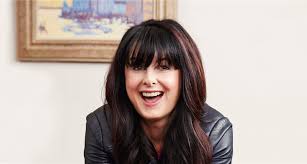
In Grown Ups the reader is encouraged to take on the role of voyeur and nosy neighbour of an extended family. There is plenty to see as the Caseys are a sociable crowd inclined to partake of dinner parties, extravagent weekends away and meet-ups. The book ends with us wondering what the different individuals will ‘get up to’ next. We feel empathy for the suffering of some of the Casey family; we dislike others, but significantly we relate to all and see bits of ourselves in them. Whilst we might nit-pick and find fault with aspects of Keyes’ writing she manages to keep us hooked. 35 million book sales speaks for itself.
Keyes’ understanding of addiction is often mentioned in reviews written about her, and she seems happy to discuss her own alcoholism. In Keyes’ recent interview on the Fortunately Podcast this crops up. Keyes talks bout how bulimia can be more challenging than alcoholism as everyone has to eat.. The podcast is well worth a listen to. It is in this interview that Keyes also made the comment that she doesn’t read male authors. She later withdrew this claim, but nevertheless … interesting!